Showing posts with label Redcoats. Show all posts

Thursday, 30 June 2011

Redcoats & Convicts Festival - Living history


Up on the third floor of The Barracks is the hammock room. This is a brilliant idea by the historians to bring history to life. Classes of school children, and community groups, are invited (for a cost!) to stay over for the night and experience life as we think it may have been for the early inhabitants of our city.


Hyde Park Barracks was a form of gaol. I guess. This is where convicts were housed durng the night and before they went out on their work gangs over Sydney town. It housed convicts for only 30 years. Only! It must have seemed an eternity to those poor blighters.

When it was converted into a museum in the 1970s and 80s, it was stripped back and everything under the floor boards saw the light of day. I got a real feel for the paucity of their existence as I wandered the rooms. Sydney Town at that time sprang to life in my imagination. Sydney has a short history, and its early population could be regarded as the 'dregs' of London of the time. However, those years from 1788 to 1821 set the national psyche up until more recent times.


As I stumbled back out into the sunshine of the present, I came face to face with a couple singing along to the drone of a hurdy-gurdy. This instrument is not everyone's cup-of-tea, but it does recreate the sounds of the times. A Hurdy Gurdy is a wheel fiddle. The sound is made by hand cranking a wooden wheel that acts as an endless violin bow, sounding drone strings and melody (chanterelle) strings. Wooden tangents are pushed against the melody strings, stopping them at different points to produce the different notes. Note the marvellous head on this model.

Tuesday, 28 June 2011

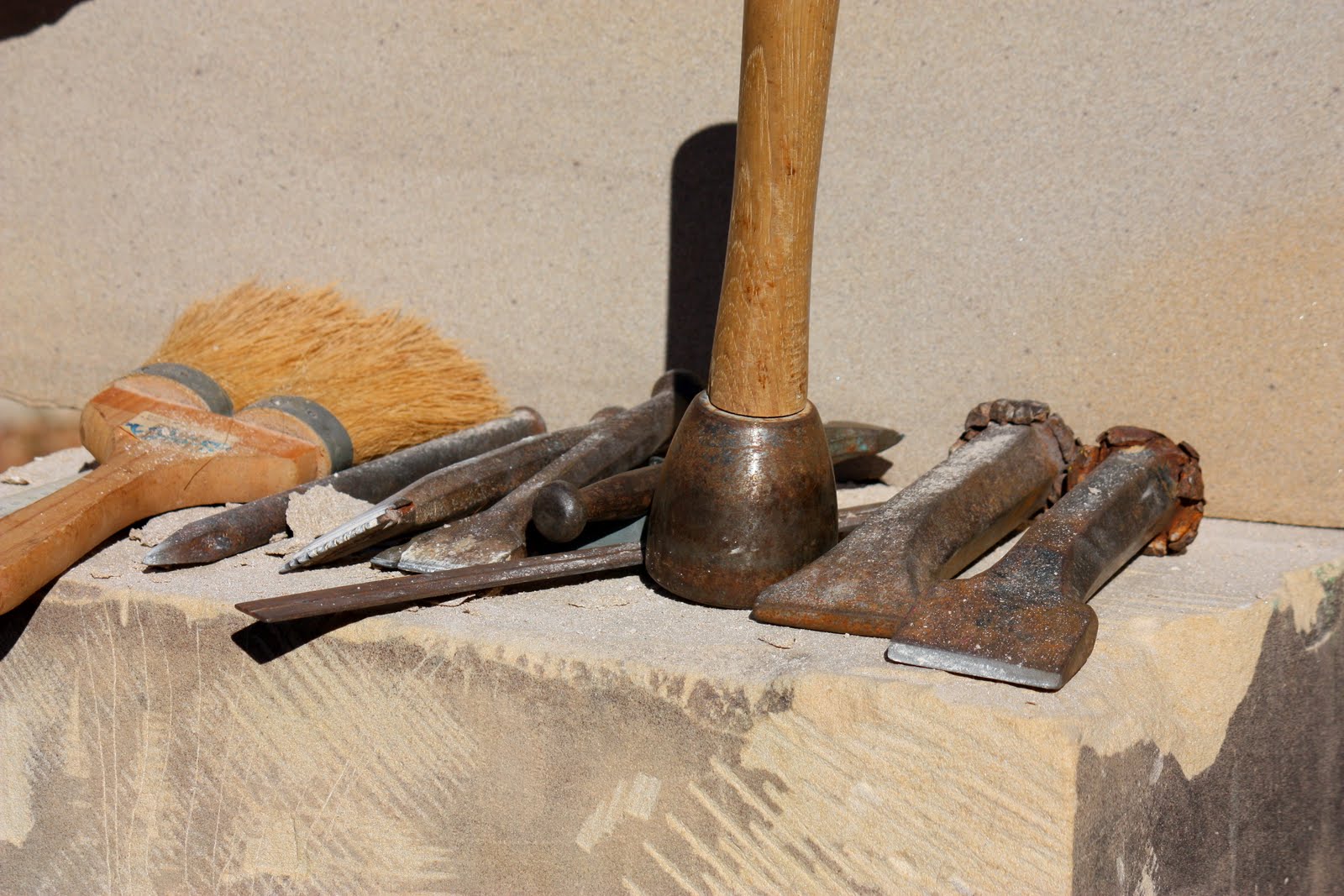
Redcoats & Convicts Festival - Traditional skills


The Colony of New South Wales was established in 1788, peopled by convicts, soldiers and a few free settlers. In 1819 Hyde Park barracks was built by gangs of convict labourers to house convicts who, up to this time, has to make their own sleeping arrangements each evening in the town.

Both convict and soldier, free-settler and emancipated-convict worked with their hands, with their brawn, using raw materials, and methods handed down through the ages.


This was before the time of the great enclosures in Britain, before the growth of the industrial towns, and the drift of farm and village workers to new horizons. Youngsters dreamt of being an apprentice, of graduating to a journeyman, and finally becoming a master of their craft. At this festival just a few crafts were hightlighted: masons, blacksmiths, and cordwainers. But Sydney-town would have resounded to the work of weavers, farriers, scriveners, wheelwrights, tanners, chandlers, loriners and mercers, among others.


As I watched these master craftsmen ply their trade, I thought of books dear to me like Flora Thompson's 'Lark Rise to Candleford', 'The Stone Quartet' of Alan Garner (especially 'The Stone Book' and 'The Aimer Gate'), and even Bruce Chatwin's much later 'On the Black Hill'. All giving a flavour of a bygone era and that which is lost. Not that I decry progress; nor am I a luddite, wanting to replace blackberries with smoke signals.


Within the HPB's museum, there is a story noting that a number of fathers, sons and brothers passed through the building. Whether any had deliberately committed offences in order to reunite families is speculation. Four example, four Reilly brothers were transported from Ireland. Luke, a tailor, was sentenced for street robbery. Peter, an illiterate stone-cutter, was sentenced for stealing flannel. Francis, a shoemaker, was transported for pickpocketing. They were later joined by another brother, Thomas. This new land offered them greater opportunities than the old.

Monday, 27 June 2011

Redcoats & Convicts Festival - Musket firing


Today was a Festival of Redcoats & Convicts at the Hyde Park Barracks which opened in 1819 to house convicts and closed in 1848. Directed at young families, the day (a glorious 21C) had a range of hands-on activities for children, and genuine tradesmen plying their trade in the courtyard: masons, 'smithies, saddlers, and seamstresses.


Being regaled in the sun with a glass of cold riesling, old English folk-songs wafting on the wind, and scurrilous convicts weaving in and out the table, doing a bit of general thievery, made for a glorious Sunday, which I will share with you for the next couple of days.