Showing posts with label Clontarf Reserve. Show all posts

Tuesday, 18 November 2014

The Spit Syphon (2/2)

When Fig Mince drew my attention to this structure in the background of one of my Chinamans Beach photos, I figured it was a government utility of some sort, just by how ugly it was! From memory, I think I googled "utility at The Spit", which brought up a lengthy heritage assessment report prepared by Mosman Council. I went looking for Parrwirri Road, and Bingo! Got its name and its originating State Government utility. Informayion was easy after that. Lots of technical guff to read though.

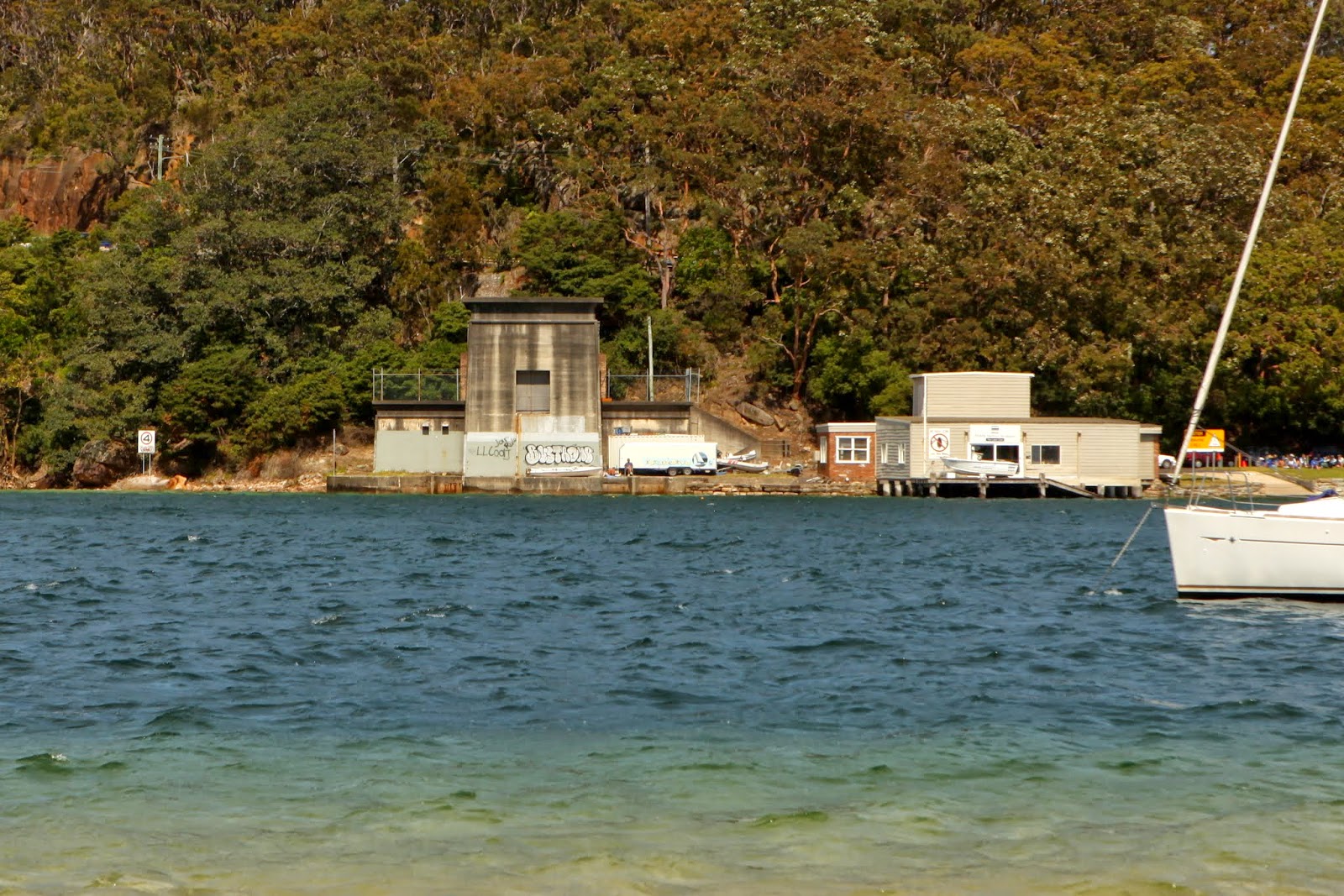
I lead this second post with a closeup of the structure on the Clontarf foreshore. It is ugly, delapidated, and an eyesore - but it is an essential element in our taken-for-granted way of life.
These two shots from Sydney Water indicate the primitive conditions endured by the workers on both the under-water section (across Middle Harbour), and the tunnels through solid rock. Three men died on the tunnelling between Clontarf and the Manly outfall. The tunnel was 90m below the surface at its greatest depth, and between Manly and Clontarf nearly 163,000 tonnes of rock had been excavated. And this feat of engineering is unheard of. The men who gave their all are not feted, their heroics not sung.
I walked from the valve-house on the Clontarf shoreline, following the pipeline (which is enclosed in a box-like concrete structure) as it cuts throgh the beach reserve, and then disappears into the steep ridge behind Clontarf. In the first shot above, I am at the raer of the valve-house looking in the direction of the ocean, along the length of pipe. In the second shot above, I am standing atop the encased pipe, looking back towards the beach. A century of growth is obvious in the size of the Moreton Bay Figs.
Peering beneath a low-slung fig branch, and across the beach access road, we see the pipes going through another valve-house, and seemingly, like the Pied Piper, throgh the hillside. It is the sort of built-environment element that one can pass by every day of one's life in blissful ignorance, unaware of the service it has performed for well-nigh a century.
I found this image of the Waste Water Treatment facility at Blue Fish Point Manly (North Head) on Flickr. Sydney Water will assure us that the water that comes out of the NSOOS and pours everyday into the Pacific Ocean is 99.99% pure. I take the Mandy Rice defence.
I am indebted to the following for information on the Northern Suburbs Ocean Outfall System (NSOOS):
Manly Daily, "Three died tunnelling sewer from Manly to Clontarf", 2nd August, 2013

Sydney Water, The Spit Syphon, Heritage Item

Monday, 17 November 2014

The Spit Syphon (1/2)

The Spit Syphon "house" seen from Clotarf. The waters of Middle Harbour stretch between.

Most Sunday mornings, my girls and I go to the beach, not an ocean beach, but to two beaches within Sydney Harbour, Clontarf Reserve or Chinamans Beach. An eagle-eyed reader spotted a structure that he recalled from his 1950s childhood in the area. So, here for you, Fig Mince, some details.

Two historic images from Sydney Water. Left: Pipe ready for launching, 1929; Right: Titan crane ready for the construction

From 1916 to about 1933, the Metropolitan Water, Sewerage, and Drainage Board (MWS&DB), now known as Sydney Water, rationalised the sewerage infrastructure across the northern half of Sydney, a massive area, and a massive undertaking. Known as the Northern Sydney Ocean Outfall System (NSOOS), the infrastructure stretched from Flushcombe Road in Blacktown, through Parramatta, Ryde, North Sydney, Mosman, Clontarf, and Harbord, ending up being piuped into the Pacific Ocean off Blue Fish Point Reserve, Manly. Yes, folks ... raw sewage straight from the home to the ocean. It only took them 60 years to put a treatment plant as the last stage of the system. Mind you, it took most of those 60 years for the citizens to demand that environmental change.

Standing on the steps of the Clontarf "house" looking toward the Spit. Chinamans Beach is to the left of the photo, on the far shore.

Between Chinamans Beach and Clontarf Reserve is the entrance to Middle Harbour, regularly used by pleasure craft. Pleasure craft owned by lots of wealthy folk. The sewerage pipes were placed on the bottom of the entrance to Middle Harbour. At either end of this section were constructed two Egyptian inspired structures to cover and disguise the system.

Left: Digging into the hillside to meet the pipe coming from North Sydney; Right: the housing not long after construction.

This section was powered by a "syphon". Hence, the structure that Fig Mince recalled came to be known as "the Spit Syphon". A spit is a marine landform, meaning deposition of sand. A syphon is a means of moving liquid uphill without a pump. There is a syphon in the Lane Cove section of the NSOOS, which had "branch lines" added to it as the northern half of Sydney expanded. Lane Cove, Castle Cove, and Hornsby were three such additions.

More about the Spit Syphon tomorrow.

The housing at the Clontard end of the syphon today. It would have to be one of the more ugly strucures on the harbour. But then, all utility structures are ugly.
This is a map that doesn't do well when embiggened! There are two horizontal lines running across a map of Suydney. The top line is the NSOOS, the bottom line is the SSOOS ... guess that acronymn ...

Sunday, 16 November 2014

How blue are my poles?

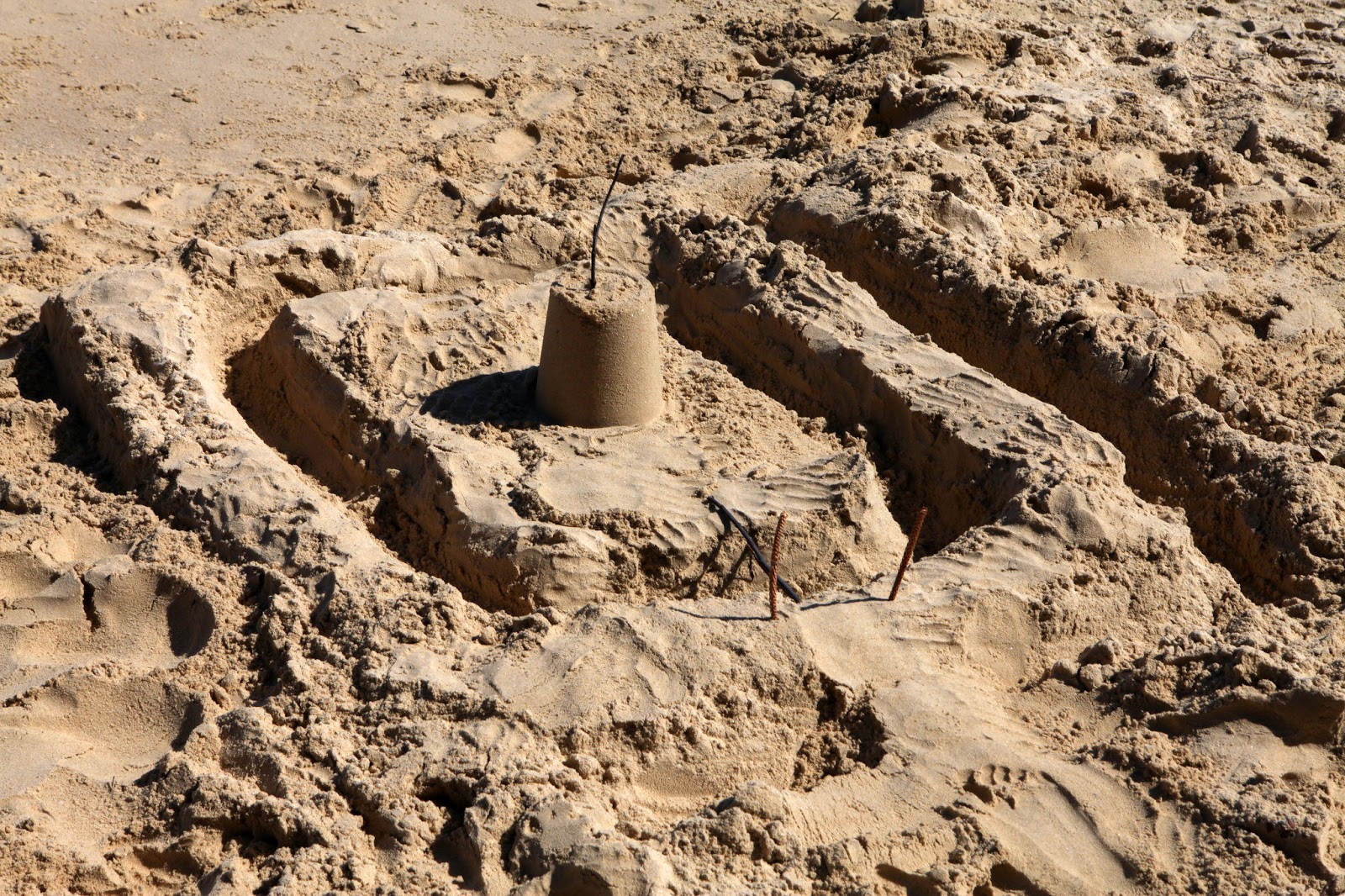
High tide at Clontarf is about 830am at the moment. As I scuffed along the wet sand, one eye on my grand-daughter, the other eye a quasi-camera, I was struck by the resemblance to that most famous of works in the National Gallery in Canberra.
It was the eleventh work created by Jackson Pollock in 1952, and it was not until two years later that he used the title "Blue Poles". I can see how that puts blinkers on viewers in the gallery, but I do like the insight into the artist's thinking.

The work was purchased by the National Gallery in 1973, at a time of political turmoil, and economic upheaval. How can this incompetent mob of left-wing (communist sympathiser) politicians pay $1.3m (AUD) for this heap of junk, so the tabloids thundered. It had scant to do with artistic appreciation, and lots to do with political agenda.

Should the work go on the market nowadays, it would fetch perhaps 50 times more. I have no idea, and I hope noone tries to test the water.

Thursday, 30 October 2014

Trust

At Clontarf, this assisting role is invariably taken by males.

Tuesday, 21 October 2014

Question Time

My grand-daughter often finds it a chore to get through dinner-time, even though thirty minutes earlier she had been starving and really, really needed a peanut-butter 'n' honey Sao. So, my daughter has introduced "Question Time". Tonight, Alannah asked, "How do you make glass?"

Mama opined that somehow sand was involved. Papa phoned his friend, Mr Google. The child was satisfied with the explanation that a part of sand was heated so very, very hot that it melted.

This sand is on Clontarf Reserve beach, but not protected by the shark enclosure. Being a calm, harbour beach, there are not many shells. There was an array of beach ephemera though, sufficient to engross this photographer.

Monday, 20 October 2014

Figment upon a Fez

The design engineer could probably see his dream in his imagination, but like many things in life, had trouble getting the vision to flow out the tips of his fingers. Perhaps it is simply a chap being held at gunpoint with a penny-bunger shoved in his mouth. Perhaps it is the last resting place of a fez afficionado. Perhaps it is a concept drawing for Escher's "Waterfall".

One of the saving graces of the seaside, is that stunted genius lasts until the next tide.

Sunday, 19 October 2014

Diplopia ... seeing double

Having achieved our aim of arriving early, the beach, although not deserted, was quiet. The Spring sun was above the ridge, but still low enough to cast a long, clear shadow. The sea-weed had hung there for many a day so, although wet, was not moist. It was shrivelled and taut, with a pungent smell. Looking more like reinforcing bars for a concrete slab, than shark-proof netting, the enclosure provides security, even though a Wobbegong could easily slither through.

Thursday, 16 October 2014

Back to the future ...

Pleasant seems underblown, yet idyllic seems overblown. I hate to say it, bit the perfect description for Clontarf Reserve is "1950s". Could that possibly be an adjective? For mine, the beach is not commercialised. Yes, there is a Whippy van, but not under that name, and it sells coffee and croissants. I gather the cafe, Clonny's, ceased. Yes, the parking metres are daylight robbery, but there are free spots if you arrive early enough, and are prepared to hoof it a bit. There us not loud music. There are not ball games over nets by people with sculptured bodies. Yes, there is a lovely multicultural mix. I guess it is the family orientaion that appeals to me.

Tuesday, 14 October 2014

Time 'n' tide ...

... wait for no man.

Shark-proof enclosures abound on the still, warm beaches within Sydney Harbour. This is Clontarf, yet again, which is on the eastern side of the Spit Bridge. There have been 30+ fatal shark attacks within the entirety of the harbour, the first in 1791, and the most recent in January 1963. I guess they make an impression on the general populace. The enclosure at Clontarf was constructed in 1949. The Mayor at the time was Bob Scharkie.

Thursday, 9 October 2014

Rituals of the summer lifestyle

One of the rituals of life in Sydney - living close to sparkling water, and clean beaches - is the family trip to the sun'n'sand each weekend. We have already had a number of days over 30C, and more are promised, or threatened! The Northbridge Baths are about a 10 minute drive, and nestle on Middle Harbour. As the warm weather really gets into the swing, it is best to arrive at our favourite beach spots - Northbridge Baths, and Clontarf Reserve - before 830am, and leave before midday. This way we beat the parking hassles, the traffic hassles, the crowd hassles, and the heat hassles. And we reckon the coffee is better earlier at Clonnys.